
Maluku Province
A Comprehensive Look at Maluku Province
🌶️Maluku Province: The Fabled "Spice Islands"
Maluku, historically known to the world as the Moluccas or the "Spice Islands," is an archipelagic province in the eastern part of Indonesia. For centuries, this region was the most sought-after destination on Earth by European powers, as it was the sole source of nutmeg and cloves—commodities once more valuable than gold. Today, Maluku is a paradise of pristine beaches, deep-sea marine beauty, and a society bound by strong fraternal traditions.
🏛️Capital City and Geographical Conditions
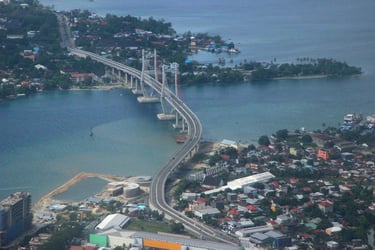
Capital City: Ambon. Located on Ambon Island, the city is the political, economic, and educational center. In 2019, UNESCO designated Ambon as a "City of Music" due to the immense musical talent of its people.
Geographical Conditions: Maluku is an archipelagic province where water makes up about 90% of the territory.
The Islands: It consists of hundreds of islands, the largest being Seram and Buru. Other significant clusters include the Banda Islands, Lease Islands (Ambon, Saparua), and the Kei Islands in the southeast.
The Sea: The province is surrounded by deep seas like the Banda Sea, known for its extreme depth and marine biodiversity.
Geology: The region is tectonically active with majestic volcanic landscapes, lush tropical forests, and white sandy coastlines.
👥Demographics and Customs
Population: The population is approximately 1.9 million people.
Ethnic Groups: The Ambonese are the dominant group, a mix of Malay and Melanesian ancestry. There are also distinct groups on islands like Kei and Tanimbar.
Customs (Adat Istiadat):
Pela Gandong: This is the most vital cultural pillar of Maluku. It is a traditional alliance system between two or more villages (often of different religions, Muslim and Christian). They pledge eternal brotherhood, helping each other during disasters or construction projects. It is the foundation of peace in the region.
Kalwedo: A cultural greeting and philosophy from the Southwest Maluku region, symbolizing peace and brotherhood.

📜History: The Wars for Spice
The history of Maluku is global history.
The Spice Trade: Before the 18th century, the Banda Islands were the only place in the world that produced Nutmeg (Pala), and islands further north produced Cloves (Cengkeh). This monopoly drew merchants from China, India, and the Middle East long before Europeans arrived.
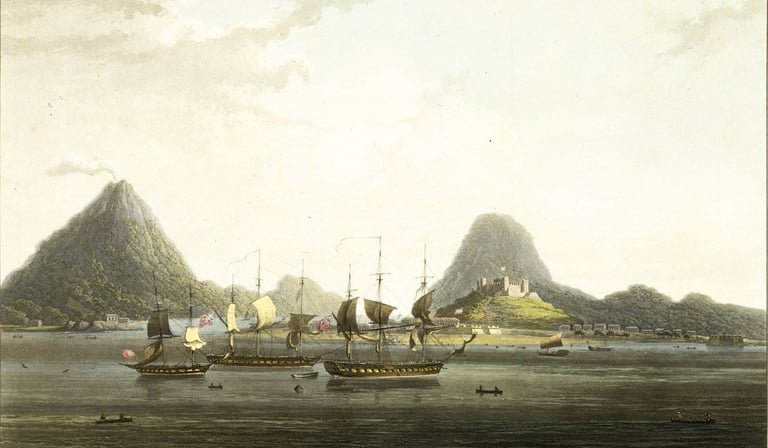
Colonial Conflict: The Portuguese arrived in 1512, followed by the Spanish, British, and Dutch. The region became a battleground for these powers. The Treaty of Breda (1667) famously saw the British trade the tiny island of Run (in Banda, Maluku) to the Dutch in exchange for the island of Manhattan (New York).
Post-Independence: Maluku saw significant sectarian conflict in the late 1990s, but has since recovered remarkably, re-establishing its reputation as a peaceful land of brotherhood.
🎨Culture and Traditional Arts
Maluku is famous for its natural musical ability and energetic dances.
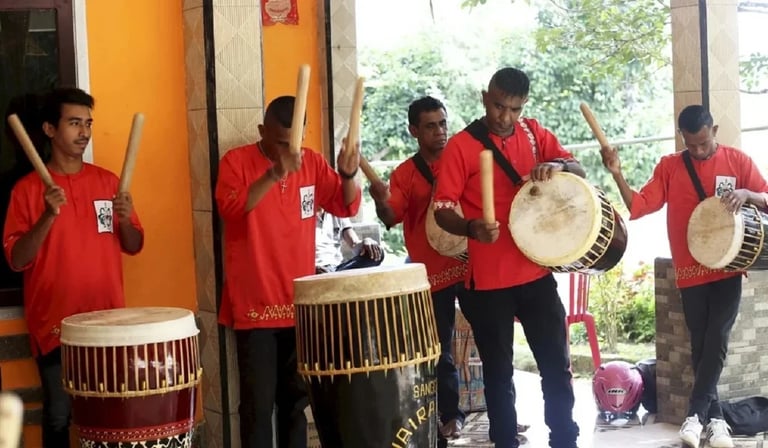
Music: Singing is a way of life in Maluku. The people are known for their powerful vocals and harmonies. Traditional instruments include the Tifa (a single-headed drum) and the Totobuang (a set of brass gongs).
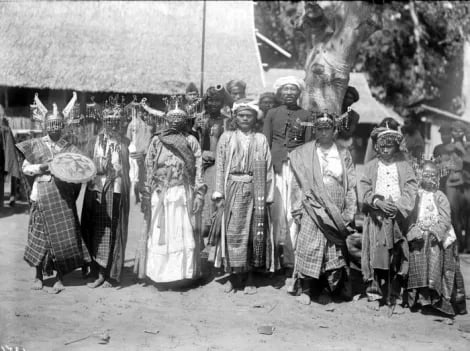
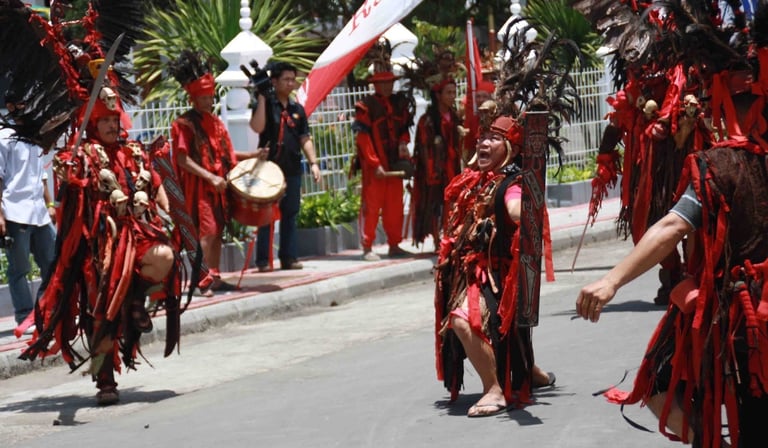
Cakalele Dance: A traditional war dance performed by men carrying a Parang (sword) and Salawaku (shield). It symbolizes the bravery and spirit of the Maluku warriors (the Kapitan).
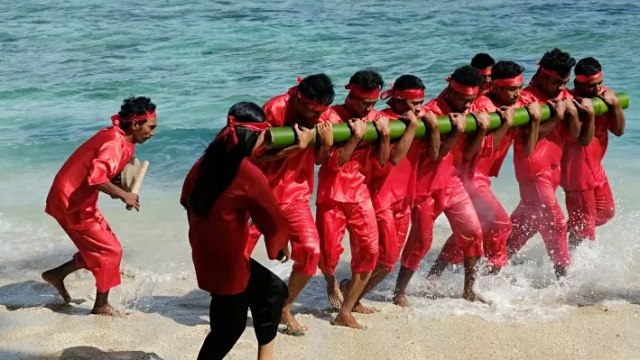
Bambu Gila (Crazy Bamboo): A mystical traditional game/ritual where a group of men hold a bamboo pole that, after being "charmed" by a shaman, becomes incredibly heavy and moves erratically on its own, dragging the men around.
Traditional Houses and Clothing of Maluku Province
Maluku, known historically as the Spice Islands, is composed of numerous islands with a rich maritime culture. The traditional life is heavily influenced by indigenous Melanesian heritage, its history as a major spice trade center, and its relationship with the sea.
🏠Traditional House : Baileo
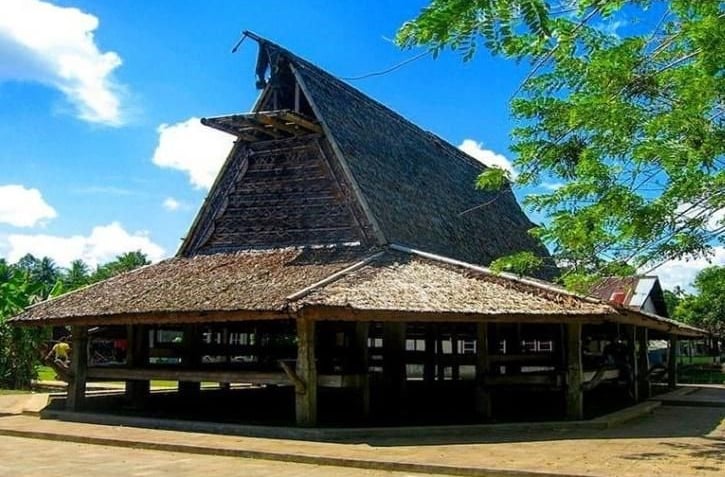
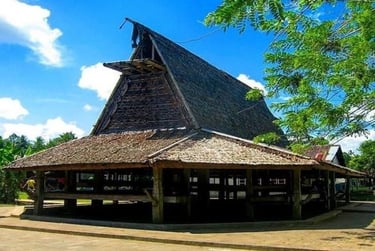
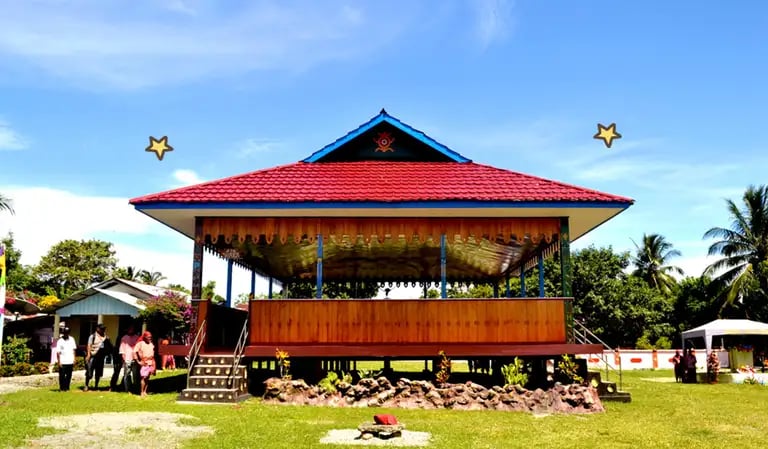
Baileo (Traditional Meeting House) The Baileo is the official traditional house of the Maluku people. Unlike typical residences, the Baileo is primarily a communal house or traditional meeting hall, serving as the center of religious, social, and political activities for the village (negeri).
Architecture The Baileo is a large, square, open structure built on high pillars, designed for excellent ventilation. It has a high, prominent roof made of sago palm leaves or thatch. Crucially, it has no permanent walls (or sometimes only short surrounding walls), reflecting the open, communal nature of the Maluku society.
Symbolism The Baileo houses the sacred symbols and objects of the village. The entrance typically faces the sea, symbolizing the Maluku people's deep connection to the ocean and their ancestors.
Rumah Adat (Residential House)
Rumah Adat Residential houses in Maluku are often simple, raised wooden structures with gabled or saddle roofs, designed to be resilient to the coastal environment.
👘Traditional Clothing : Baju Cele
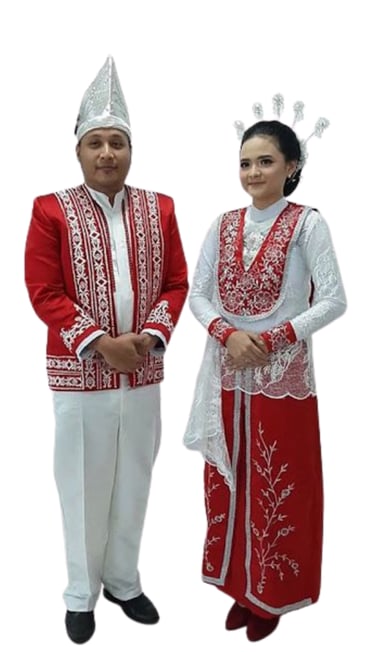
Pakaian Adat Maluku (Maluku Traditional Attire) The formal attire is characterized by its simplicity, modesty, and the use of locally woven fabrics, often featuring bright, striking colors.
General Feature
Baju Cele The most recognizable component is the Baju Cele, a loose, white or light-colored shirt or blouse. The fabric is typically decorated with bold, geometric patterns or colorful lines that are woven or sewn into the cloth. The design is simple but eye-catching.
Women's Attire (Baju Adat Perempuan)
Baju Cele and Kain Salele Women wear the short-sleeved or long-sleeved Baju Cele blouse, paired with a matching, brightly colored, patterned Kain Salele (sarong) wrapped around the waist. Accessories include the Konde (hair bun) adorned with golden pins and the Pabiring (a gold waistband), symbolizing the wealth derived from the spice trade.
Men's Attire (Baju Adat Laki-laki)
Baju Putih and Celana Panjang Men wear a plain white shirt or a short-sleeved Baju Cele top, often paired with dark trousers (Celana Panjang). A brightly patterned, woven Sarong is typically worn as a sash (salempang) across the shoulder or wrapped around the waist. The outfit is completed with a destar (traditional headcloth) or a simple black cap.
🍲Distinctive Traditional Cuisine
Maluku cuisine is fresh, tangy, and heavily reliant on sago and fish.
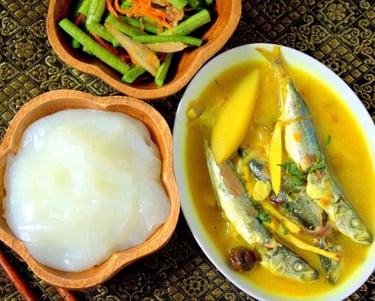
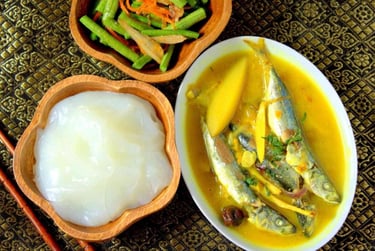
Papeda and Ikan Kuah Kuning: The staple meal of Maluku. Papeda is a glue-like, translucent porridge made from sago starch. It has a bland taste, so it is swallowed (not chewed) with Ikan Kuah Kuning, a fish soup cooked in a rich, sour, and savory turmeric broth with kenari nuts and basil.
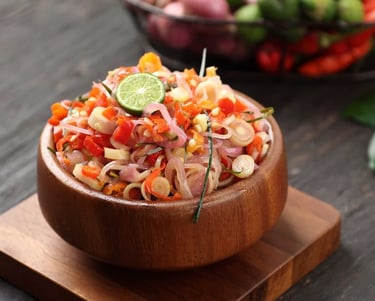
Sambal Colo-Colo: The most famous condiment. It requires no cooking; it consists of chopped chilies, shallots, tomatoes, and green lime (lemon cui), all drenched in sweet soy sauce (kecap manis). It is the perfect pair for grilled fish.
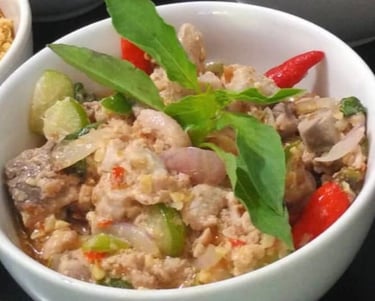
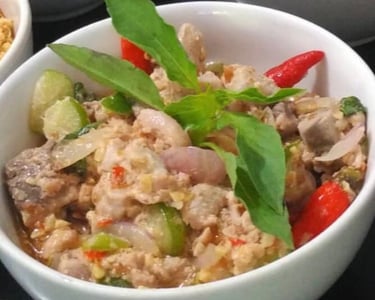
Gohu Ikan: Often called "Ternate Sashimi." It features fresh raw tuna diced and marinated in salt, lime juice, and basil leaves, then topped with hot oil, fried shallots, and chili. It is fresh, savory, and not "fishy" at all.
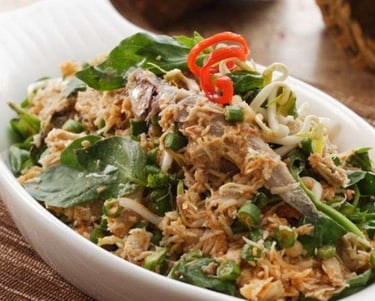
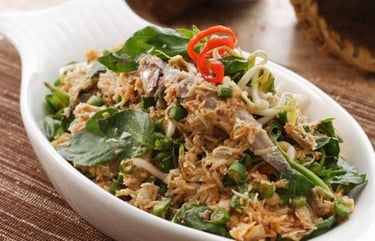
Kohu-Kohu: A salad similar to Javanese Urap. It consists of blanched vegetables (long beans, bean sprouts, spinach) mixed with grated coconut, lime juice, spices, and shredded smoked fish (ikan cakalang or tongkol).
Manisan Pala: A snack made from the flesh of the nutmeg fruit, dried and sugared.
🗺️Famous Tourist Attractions
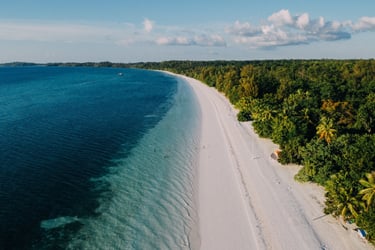
Maluku offers history and some of the world's best beaches.
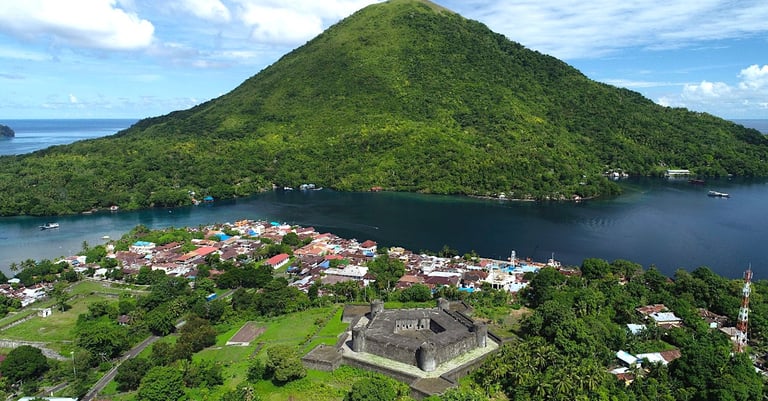
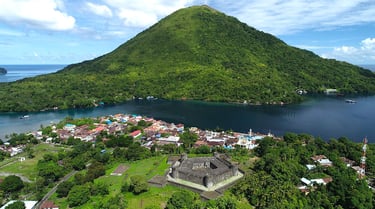
Banda Neira: A living museum. Visitors can explore Fort Belgica (a well-preserved Dutch pentagonal fortress), snorkel in pristine waters, and trek the active volcano Gunung Api Banda.
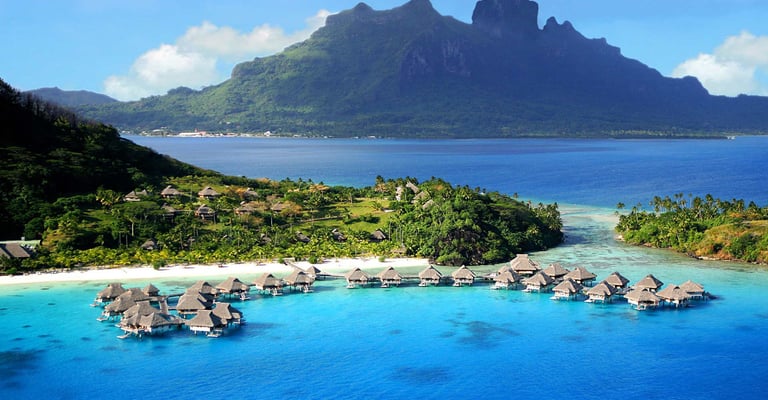
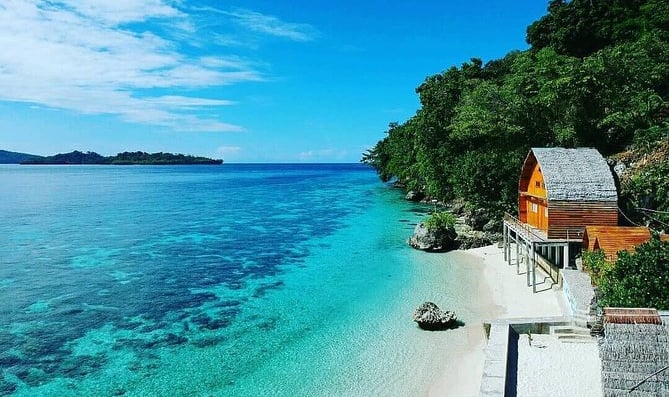
Ora Beach (Seram Island): Often called the "Maldives of Indonesia," this secluded beach features eco-resorts with wooden cottages hovering over crystal-clear turquoise water and coral reefs.
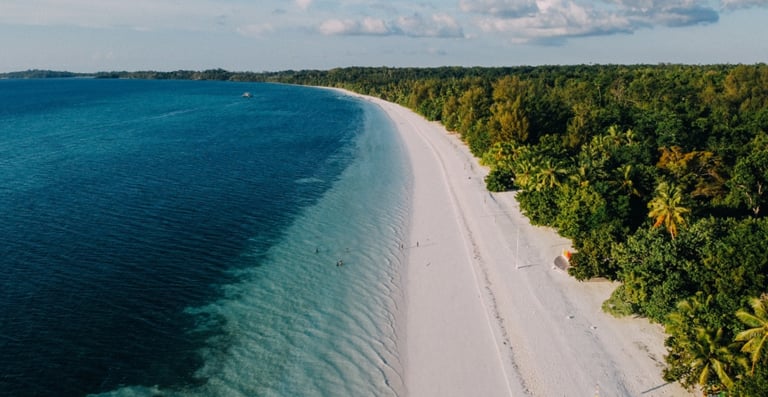
Ngurbloat Beach (Kei Islands): Famous for having the "softest sand in the world," characterized by its flour-like white texture stretching for kilometers.
Natsepa Beach: Located near Ambon city, famous for its calm waters and the legendary local snack, Rujak Natsepa (fruit salad with peanut sauce).
✈️Transportation Infrastructure
Given its geography, sea and air travel are the lifelines of the province.
Airport (Bandar Udara):
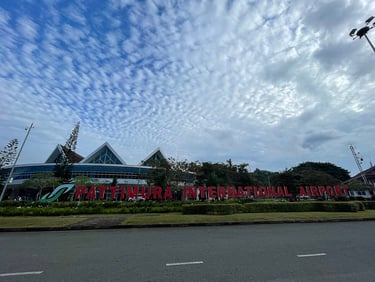
Pattimura International Airport (AMQ): Located in Ambon, this is the main hub connecting Maluku to Jakarta, Makassar, and Surabaya.
Smaller pioneer airports exist on outer islands like Langgur (Kei) and Banda Neira to facilitate tourism and logistics.
Port (Pelabuhan):
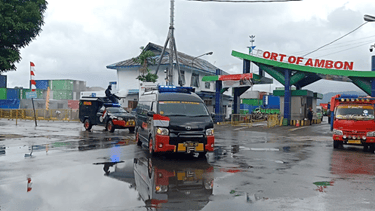
Yos Sudarso Port (Ambon): The main commercial seaport.
Pelni Ships: Large national passenger ships are the "subway" of Maluku, connecting Ambon, Banda, Tual, and other remote islands efficiently and affordably.
Ferries: Numerous smaller ferries connect Ambon to nearby islands like Seram and Saparua.
Railroad (Stasiun Kereta Api):
Maluku Province does not have any railway network. Inter-island travel is by boat/plane, and on-island travel is by road.


Maluku is more than just a chapter in a history book about the spice trade; it is a vibrant, living archipelago that captivates the soul. From the historic ramparts of Fort Belgica, where the scent of nutmeg still lingers, to the flour-soft sands of the Kei Islands, Maluku offers an adventure that is both raw and refined. Bound by the sacred vow of Pela Gandong, the people of Maluku invite you to share in their music, taste the zest of their Colo-Colo, and experience the warmth of the true "Manise" (sweet/beautiful) spirit.
Follow us to explore Indonesia with expert travel guidance
©PT.Sinar Pesona Travelindo 2025. All rights reserved.