

Riau Islands Province (Kepulauan Riau)
A Comprehensive Look at Riau Islands Province (Kepulauan Riau)
Riau Islands Province (Kepulauan Riau): The Gateway to the Malacca Strait
The Riau Islands Province, often abbreviated as Kepri, is a young and dynamic province in Indonesia, geographically distinct from its neighbor, Riau. Consisting of a vast archipelago, Kepri holds immense strategic importance due to its location bordering Singapore and Malaysia, making it a crucial international trade, tourism, and industrial hub.
🏛️Capital City
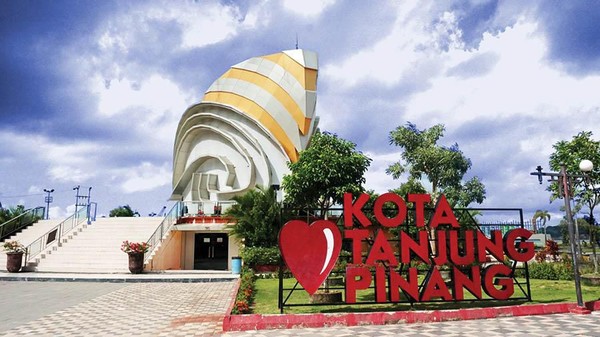
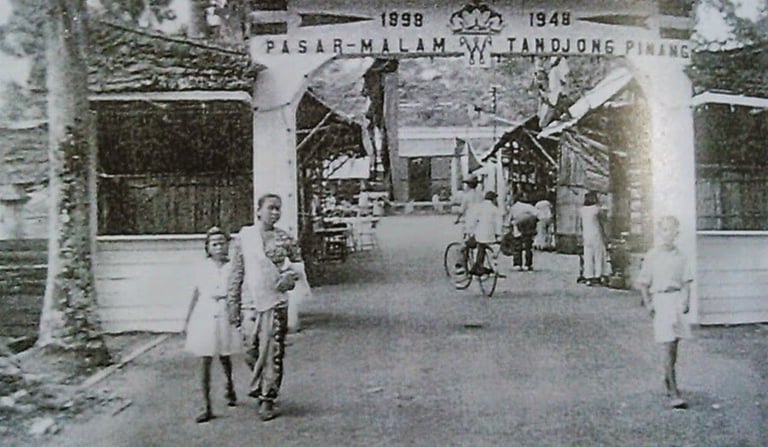
Capital City: Tanjung Pinang. Tanjung Pinang, located on Bintan Island, is the historical and governmental capital, though the neighboring island of Batam often serves as the economic and industrial center.
Ethnic Groups: The indigenous and culturally dominant group is the Malay (Melayu) people. However, due to its economic zones and proximity to other regions, the population is highly diverse. Significant communities include:
Orang Laut (Sea Nomads): Indigenous groups who traditionally live a nomadic life on their boats around the islands.
Chinese Indonesian: A large, established community, especially in Tanjung Pinang and Batam, playing a vital role in trade.
Batak, Minangkabau, and Javanese: Immigrants attracted by the industrial and economic opportunities in Batam and Bintan.
Language: Bahasa Indonesia is the official language. Local communication often uses various dialects of Malay Riau. English and Mandarin are also widely spoken in the trade and tourism centers (Batam, Bintan).
Religion: The majority of the population practices Islam, reflecting the deep Malay cultural identity. There are also significant communities of Buddhists, Christians, and Confucians.
🏞️Geography and Natural Conditions
Kepulauan Riau is defined entirely by its status as an archipelago.
Archipelago Structure: The province consists of approximately 2,408 islands, the largest and most prominent being Batam, Bintan, Karimun, and the distant Natuna and Anambas islands.
Strategic Location: The province is situated directly south of the Singapore Strait and along the Malacca Strait, giving it immense geopolitical and economic importance.
Topography: The islands are generally low-lying with pristine white-sand beaches, clear waters, and coastal mangroves. The climate is tropical, characterized by high humidity.
👥Demographics and Population
Kepri has a relatively small but rapidly growing population, estimated at around 2.2 million people.

📜 History: The Nexus of the Malay World
The history of the Riau Islands is the history of maritime power and the roots of the Malay culture.
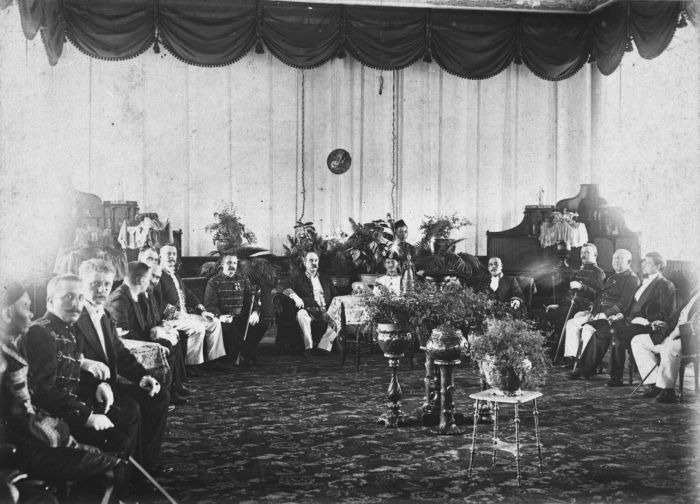
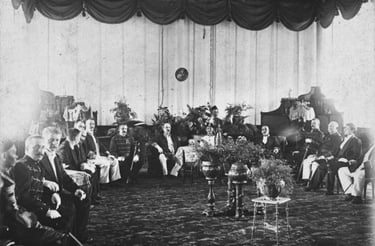
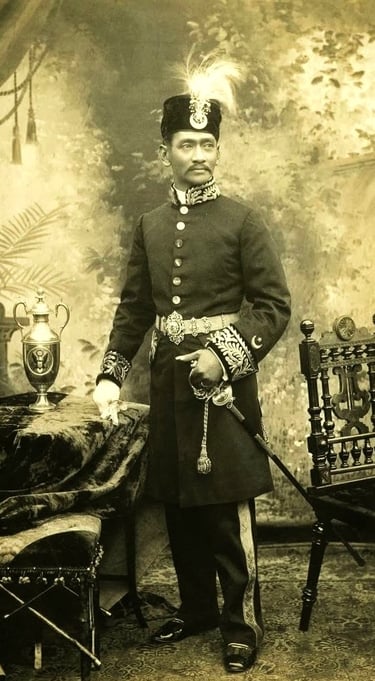
The Riau-Lingga Sultanate: The islands, particularly Penyengat Island near Tanjung Pinang, were the heart of the powerful Riau-Lingga Sultanate (established after the split of the Johor Sultanate in the 18th century). This sultanate was a major center for Malay language, literature, and Islamic scholarship. The standardized Malay used here became the foundation for both modern Bahasa Indonesia and Bahasa Malaysia.
Colonial Influence: The islands were highly sought after by European powers due to their location on the Malacca Strait. The Dutch ultimately gained control, but the proximity to British-controlled Singapore ensured a constant cross-cultural interaction.
Formation of the Province: Kepulauan Riau was part of Riau Province until 2002 when it was officially separated to become its own province, recognizing its distinct geographical, economic, and cultural profile.

🎨Culture, Customs, and Traditional Arts
The culture of Kepri is quintessential Maritime Malay Culture (Budaya Melayu Maritim), centered on the sea and deeply rooted in Islamic scholarship.
Adat (Customs): Malay customs and etiquette emphasize respect, courtesy, and religious adherence. The concept of gotong royong (mutual cooperation) is fundamental to community life.
Traditional Arts:
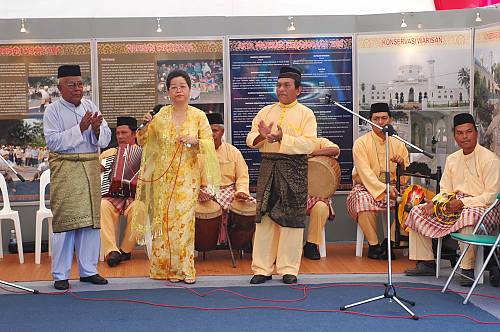
Dondang Sayang: A traditional Malay musical performance featuring lyrical exchanges (often poetic Pantun) between a male and female singer, accompanied by violins, drums, and gongs.
Tari Zapin (Zapin Dance): The classical Malay dance form, characterized by elegant, quick footwork and hand movements.
Pantun: The islands are the historical birthplace of this poetic form (a four-line strophe with an ABAB rhyme scheme), which is central to Malay verbal artistry.
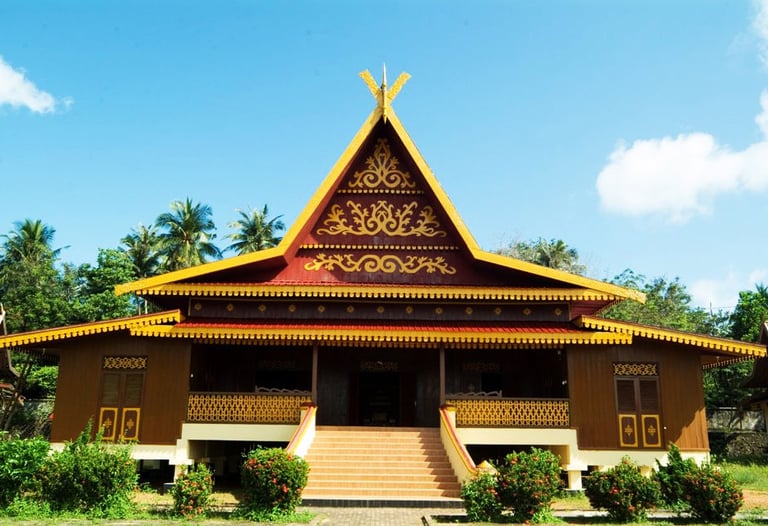
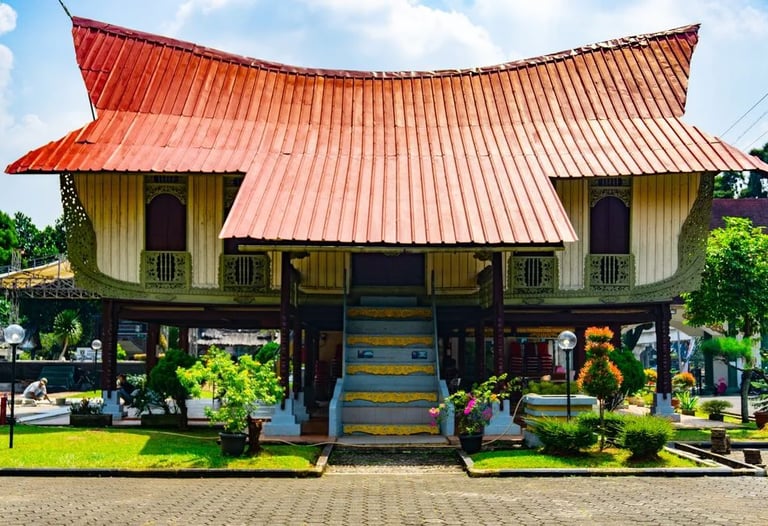
Architecture: Traditional Malay houses often feature bright colors, intricate wood carvings, and are built on stilts. The yellow color, often associated with royalty, is prominent in official and cultural buildings.


🏠Traditional House : Rumah Selaso Jatuh Kembar
Traditional House (Rumah Adat)
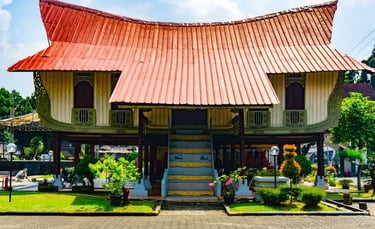
Rumah Selaso Jatuh Kembar This traditional hall is the most prominent Rumah Adat of Riau. It is a stilt house built on strong wooden piles, designed to adapt to Riau's geographical conditions of swamps and rivers. Its name, "Twin Sunken Hall," refers to the Selaso (porch/veranda) that surrounds the main structure, where the floor level is lower than the central room. It primarily functions as a place for community meetings, traditional ceremonies, and social gatherings, symbolizing togetherness and shared governance.
Alternative House Style Rumah Lontik (or Rumah Lancang) Another notable style, particularly found in the Kampar region. It is characterized by its slightly curved roof that resembles a boat (or lancang), with its pointed ends said to resemble buffalo horns, showing Minangkabau influence.
👘Traditional Clothing : Teluk Belanga and Baju Kurung
Men's Attire (Baju Adat Laki-laki)
Teluk Belanga This is a traditional male attire consisting of a loose-fitting, simple shirt with long sleeves, often paired with matching trousers. The shirt has a round neckline that is slightly slit and often uses a small button called tulang belut. It is typically completed with a sarong or songket fabric wrapped around the waist and a traditional Malay headpiece called a Tanjak (a folded piece of songket cloth).
Women's Attire (Baju Adat Perempuan)
Baju Kurung and Kebaya LabuhWomen typically wear the Baju Kurung, a loose-fitting, long-sleeved blouse that is modest and elegant. The Kebaya Labuh is a variation that is cut longer, covering the hips down to the knees. Both tops are paired with an exquisitely woven Songket fabric as the skirt, and the entire outfit is often adorned with gold jewelry.


🍲Distinctive Cuisine
The cuisine of Kepri heavily relies on fresh seafood, utilizing local spices and Malay cooking methods.
Otak-Otak: A highly popular snack made from ground fish mixed with spices and coconut milk, wrapped in banana leaves, and grilled over charcoal. The best varieties are found in the islands.
Gonggong: A specific type of sea conch that is a delicacy unique to the Riau Islands. It is usually boiled and served with chili sauce.
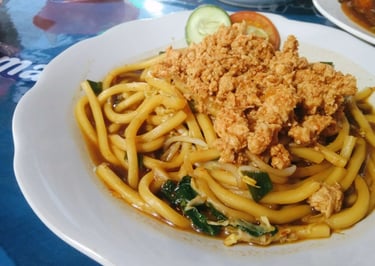
Lakse Kuah: Noodles cooked in a thick, savory fish curry sauce made with coconut milk.
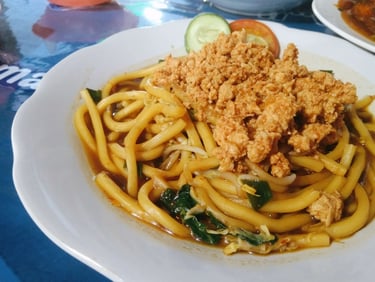
Mie Tarempa: Noodles cooked in a thick broth with shredded fish, originating from the Tarempa islands in Anambas.






🗺️Famous Tourist Attractions
Kepri is a major destination for international tourism and business, offering luxury resorts and historical sites.
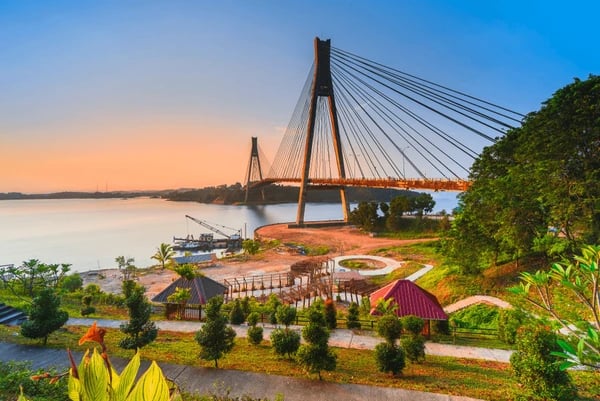
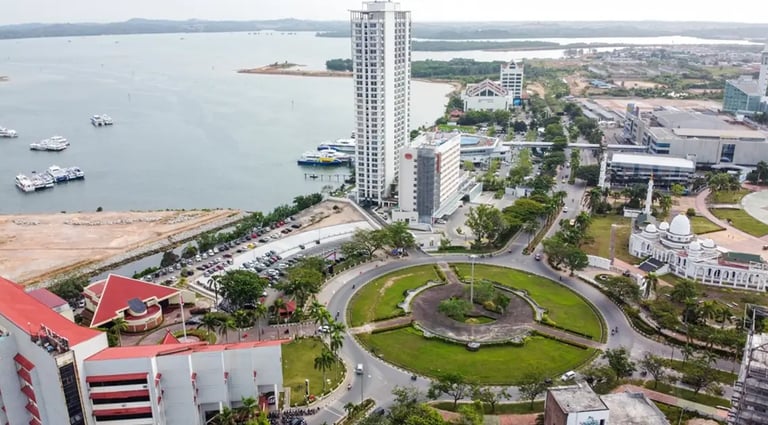
Batam Island: Known as the major industrial and trade hub. Key attractions include the Barelang Bridge (a series of six bridges connecting Batam, Rempang, and Galang islands), and duty-free shopping.
Bintan Island: Famous for its world-class integrated resorts (Bintan Resorts) that cater heavily to Singaporean and international tourists, offering golf, water sports, and luxury accommodation.
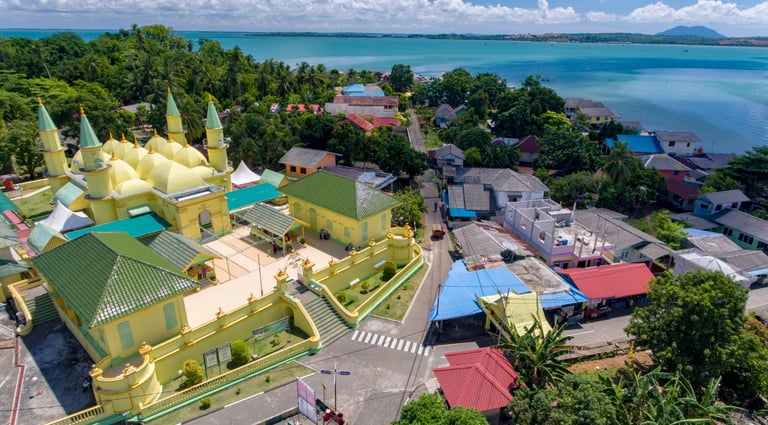
Penyengat Island (Pulau Penyengat): The historical heart of the Riau-Lingga Sultanate. The island features the Sultan Riau Grand Mosque (Masjid Raya Sultan Riau), built using egg whites as mortar, and the royal mausoleums.
Anambas Islands: Often cited among the world's most beautiful tropical islands, offering pristine waters, isolated diving spots, and stunning beaches far from the main industrial centers.
Tanjung Pinang: The provincial capital on Bintan Island, offering historical architecture, local markets, and the port leading to Penyengat Island.




✈️Transportation Infrastructure
The infrastructure of the Riau Islands is crucial for connectivity, supporting both its industrial hubs and its extensive tourism sector.
Airports (Bandar Udara):
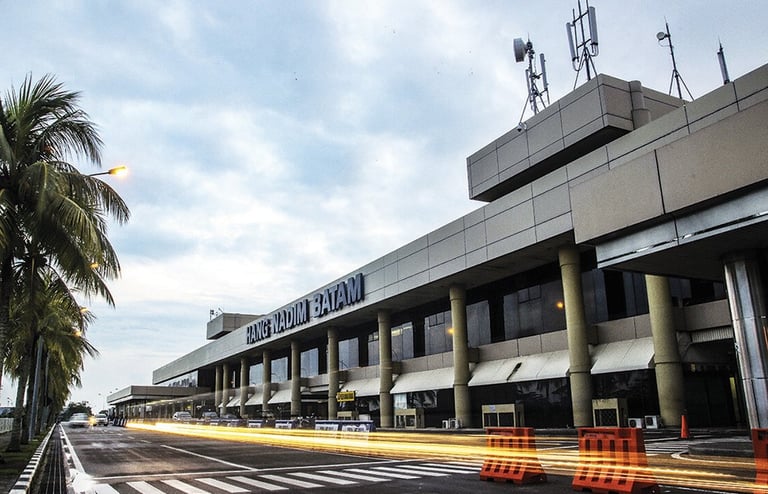
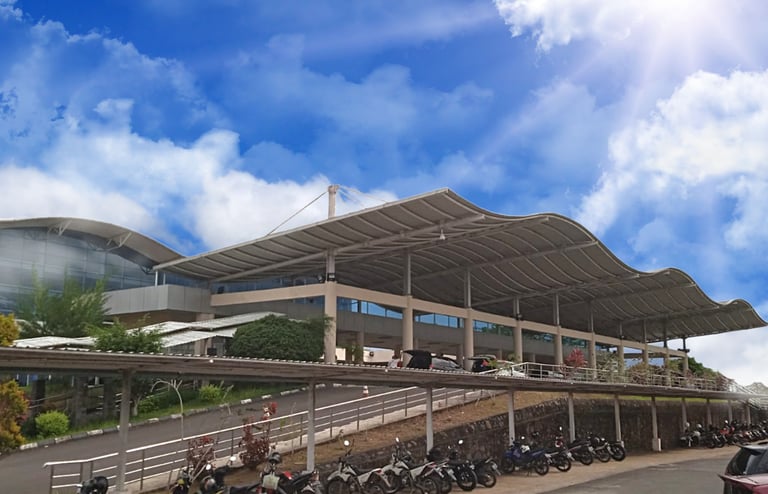
Hang Nadim International Airport (BTH): Located in Batam, this is the main and busiest airport, serving extensive domestic routes and international flights, primarily to Malaysia and Singapore.
Raja Haji Fisabilillah International Airport (TNJ): Located in Tanjung Pinang (Bintan), serving domestic flights and supporting the local governmental and tourism sector.
Ports (Pelabuhan):
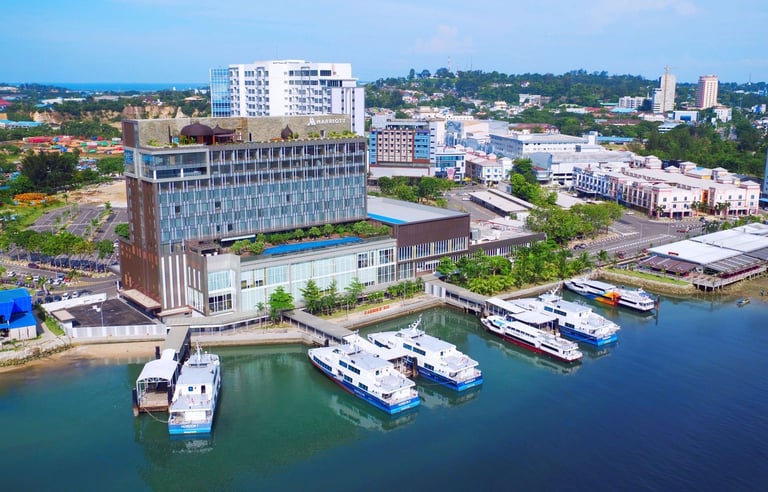
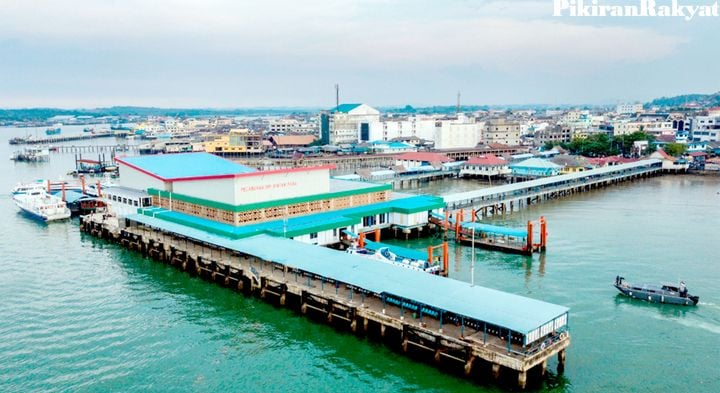
Batam (Sekupang, HarbourBay, Batam Centre): Known for its numerous busy ferry terminals offering frequent international connections to Singapore and Malaysia, as well as inter-island services.
Bintan (Sri Bintan Pura, Tanjung Pinang): Handles passenger ferries and international connections, particularly to Singapore.
Kijang Port (Bintan): The main commercial port for cargo and industrial operations.
Railroad (Stasiun Kereta Api):
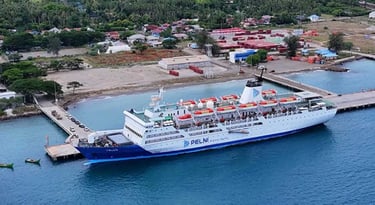
The Riau Islands Province does not have any active railway network or passenger train stations. Transportation is primarily conducted via ferry/boat (inter-island) and road networks (on-island).

The Riau Islands Province successfully blends the legacy of the classical Malay maritime kingdoms with the rapid economic development of modern Southeast Asia, standing as Indonesia's true international gateway.
Follow us to explore Indonesia with expert travel guidance
©PT.Sinar Pesona Travelindo 2025. All rights reserved.