

West Sumatra Province
A Comprehensive Look at West Sumatra Province
🐂West Sumatra Province (Sumatera Barat): The Home of the Matrilineal Minangkabau
West Sumatra is a distinctive and highly cultural province on the west coast of Sumatra Island, Indonesia. It is the ancestral home of the Minangkabau people, one of the world's largest matrilineal societies. The province is famous for its stunning highlands, dramatic architecture, and a cuisine that has achieved global fame: Padang food.
🏛️Capital City
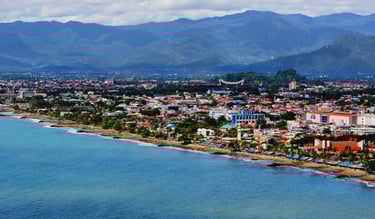
Capital City: Padang. Padang is the largest city on the west coast of Sumatra, serving as the economic, political, and cultural hub for the Minangkabau people, with a long history as a major port.
Ethnic Groups:
Minangkabau: They are the dominant and indigenous ethnic group, characterized by their unique customs, architecture, and language (Minangkabau language or Bahasa Minang).
Mentawai: Found on the Mentawai Islands off the western coast, known for their distinct animistic traditions and traditional tattooing practices.
Batak: Smaller communities are found near the border with North Sumatra.
Language: Bahasa Minangkabau is the mother tongue, though Bahasa Indonesia is used for official communication and education.
Religion: The population is overwhelmingly Muslim (Sunni Islam). Islam is deeply integrated into the Adat system of the Minangkabau people.
🏞️Geography and Natural Conditions
West Sumatra boasts some of the most spectacular scenery in Indonesia, dominated by highlands and volcanoes.
Bukit Barisan Mountains: The province lies along the spine of the mountains, featuring numerous peaks and plateaus, including the famous Bukittinggi Plateau.
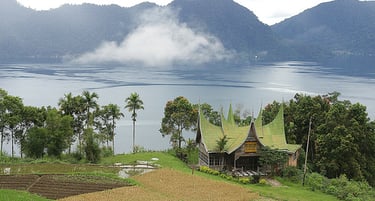
Lakes: It is home to several major lakes, including Lake Singkarak and Lake Maninjau, both nestled in volcanic craters, offering stunning views.
Climate: Tropical climate, but the elevation in the highlands (e.g., Bukittinggi) provides cooler, pleasant temperatures.
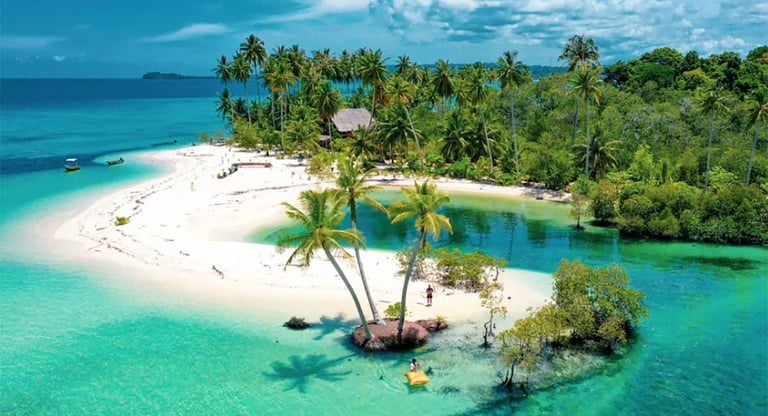
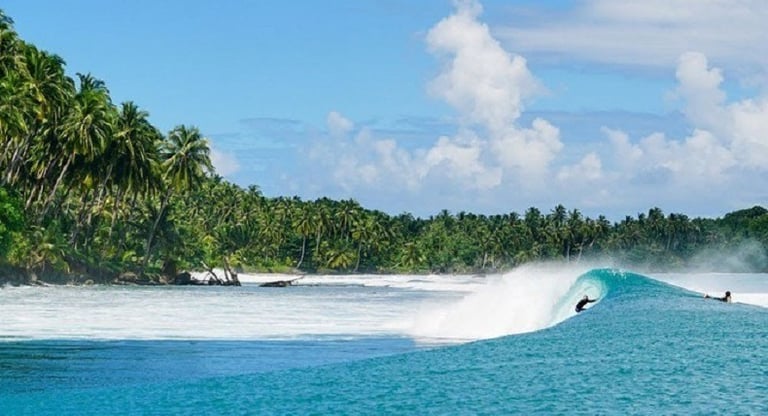
Coastline: A long western coastline facing the Indian Ocean, known for its surf breaks and the Mentawai Islands archipelago.
👥Demographics and Population
West Sumatra has a population of approximately 5.7 million people.

📜History: Matrilineal Traditions and The Paderi War
West Sumatra's history is deeply connected to the evolution of the Minangkabau socio-political structure.
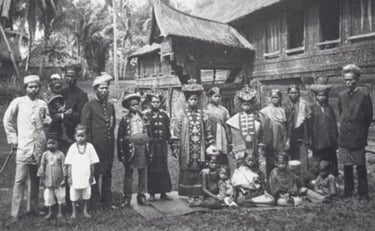
Minangkabau Culture: The culture is rooted in the philosophy "Adat Basandi Syarak, Syarak Basandi Kitabullah" (Custom based on Islamic Law, Islamic Law based on the Qur'an). The Minangkabau trace their lineage through the female line (matrilineal), and ancestral property is traditionally inherited by daughters.
The Pagaruyung Kingdom: This influential kingdom (circa 14th to 19th centuries) was the center of Minangkabau political and cultural life, known for its unique blend of adat (custom) and Islamic governance.
The Paderi War (1803–1838): This conflict was fought between the traditional Adat leaders and a reformist Islamic group known as the Padri. The war eventually drew in the Dutch colonial forces, who used the conflict to solidify their control over the region.
Post-Independence: The region has played a central role in Indonesian political history, producing many national figures, including founding father Mohammad Hatta.
🎨Culture, Customs, and Traditional Arts
Minangkabau culture is defined by its adat and its iconic architecture.
Matrilineal System: The core of Minangkabau social life. While religious and political leadership is often held by men, the lineage is traced through the mother, and communal property (harta pusaka) belongs to the women.
Merantau (Migration): The tradition of young men leaving their homes to seek experience, wealth, and knowledge in other parts of Indonesia and the world. This tradition is responsible for the widespread establishment of Padang restaurants globally.
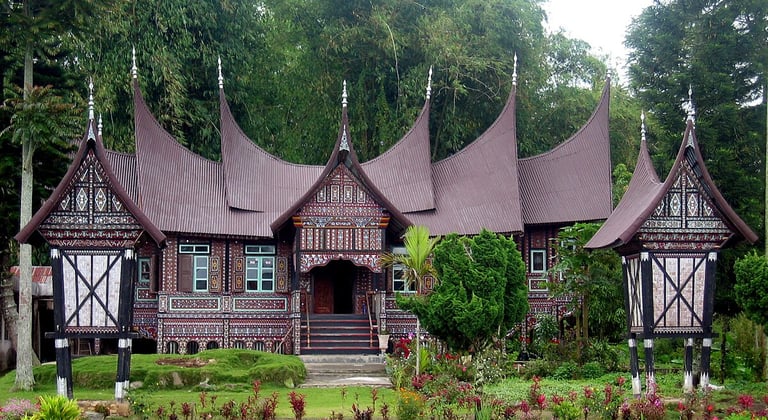
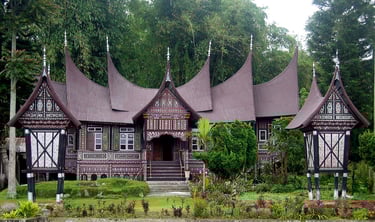
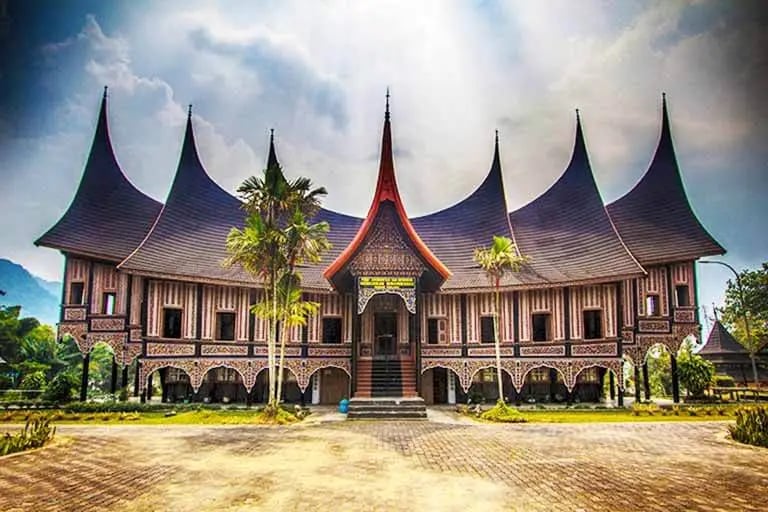
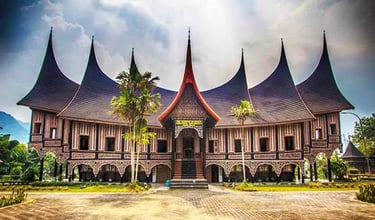
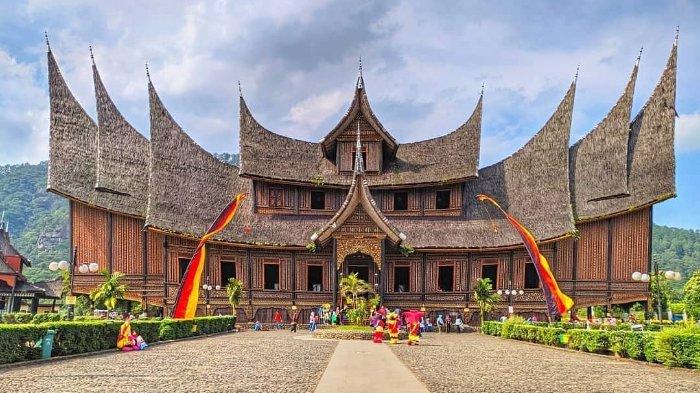
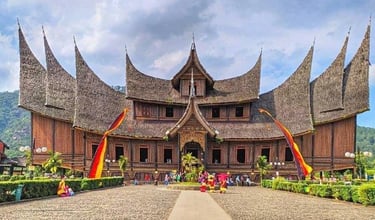
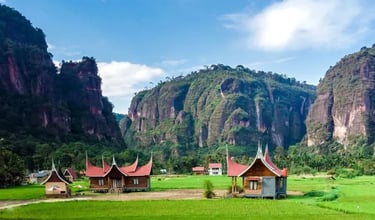
Traditional House (Rumah Gadang): The iconic Minangkabau communal house. It is distinguished by its dramatic, sweeping, multi-tiered roof, which resembles the horns of a buffalo (tanduk kerbau).
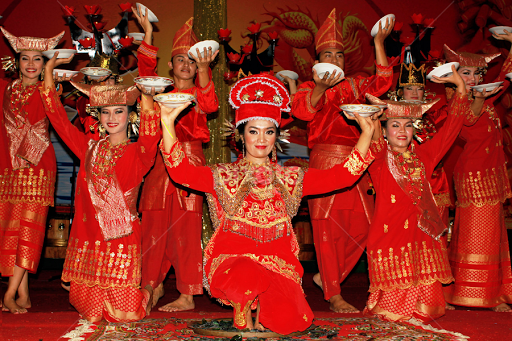
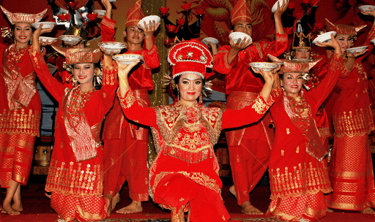
Traditional Arts: The Tari Piring (Plate Dance) is a renowned performance where dancers skillfully balance plates in their hands while moving dynamically.
🏠Traditional House : Rumah Gadang
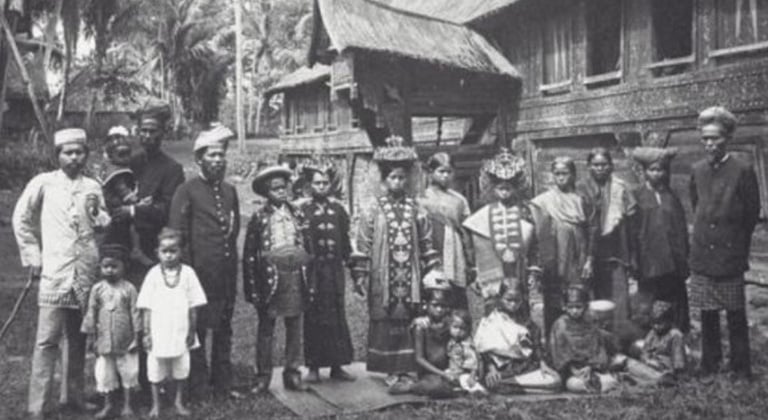
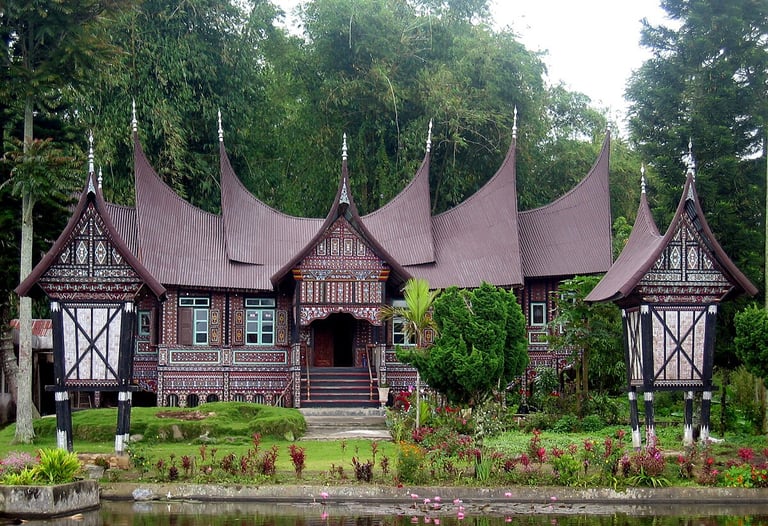
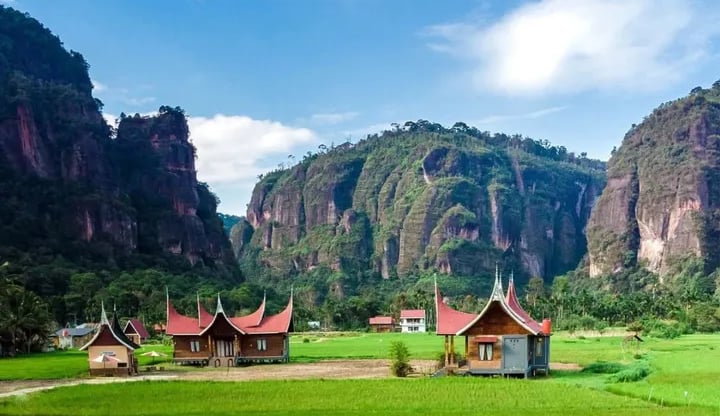
Rumah Gadang (Big House) This is the iconic and highly distinctive traditional house of the Minangkabau people. It is a large, rectangular stilt house characterized by its dramatic curved, sweeping roofline that resembles the horns of a water buffalo (gonjong). The house is generally owned by the female line of a family (matrilineal) and serves as a residence, a hall for ceremonies, and a reflection of the family's status. The walls are often adorned with beautiful floral carvings and paintings.
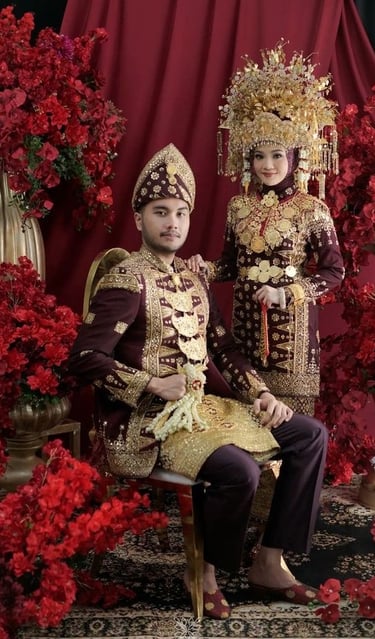
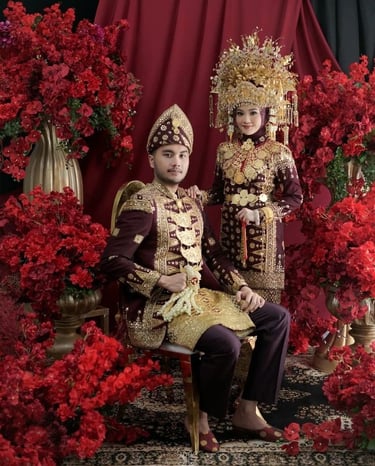
👘Traditional Clothing : Bundo Kanduang and Limpapeh Rumah Nan Gadang
Women's Attire (Baju Adat Perempuan)
Bundo Kanduang (The Honored Mother) or Limpapeh Rumah Nan Gadang This is the official and most revered traditional female attire, symbolizing the respected role of women in the Minangkabau matrilineal system. The outfit includes an ornate Baju Kurung (long-sleeved blouse) and a skirt of Songket fabric. The most striking feature is the Tingkuluak or Tangkuluak, a complexly folded head covering that resembles the gonjong (buffalo horn) roof of the Rumah Gadang.
Men's Attire (Baju Adat Laki-laki)
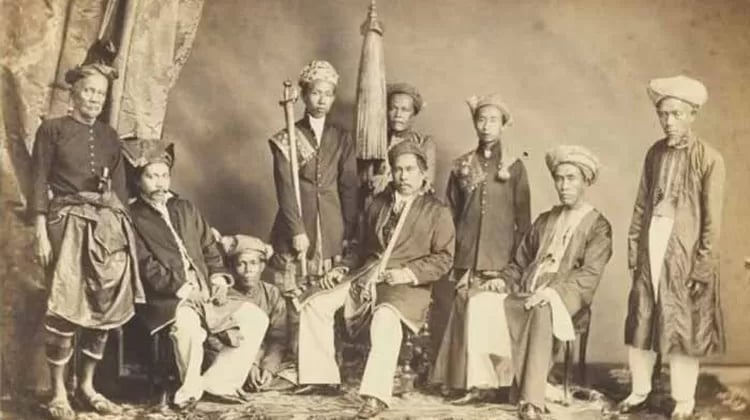
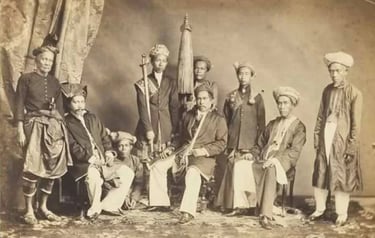
Penghulu (Chieftain) Attire Male attire, typically worn by tribal chieftains (Penghulu), consists of a large, loose-fitting black jacket (often embroidered with gold threads), black trousers, a brightly woven Songket fabric wrapped as a sarong (sisampiang), and a belt (salempang). The outfit is completed with a distinctive head covering called a Saluk or Deta and a ceremonial dagger (keris).
🍲Distinctive Cuisine
Minangkabau cuisine, universally known as Padang Food (after the capital city), is famous globally for its complexity, rich use of coconut milk, and strong spices.
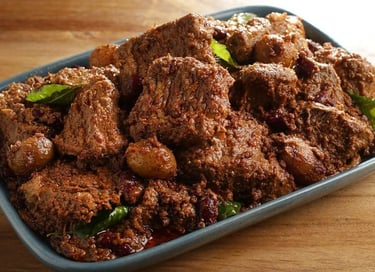
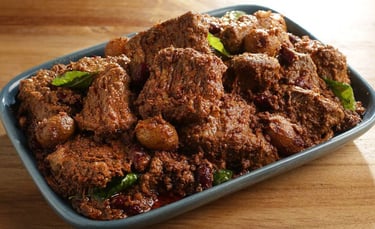
Rendang: The most celebrated dish—meat (usually beef) slow-cooked for hours in coconut milk and a complex paste of herbs and spices until the liquid dries out. It was named the world's most delicious food by CNN Travel.
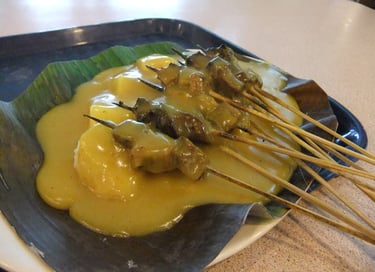
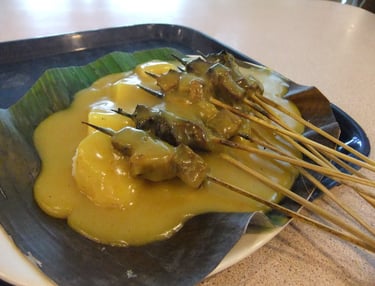
Sate Padang: Unique from other Indonesian satays, this features grilled beef skewers served with a thick, savory, yellow or brownish sauce made from a rice flour, spice, and ground peanut mixture.
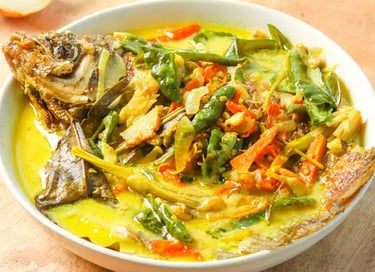
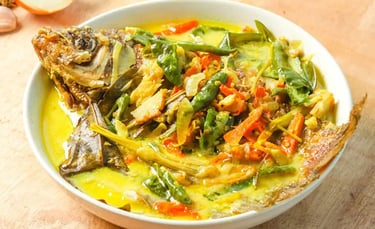
Gulai: A rich, yellow curry, typically made with fish, chicken, or various vegetables, utilizing coconut milk and turmeric.
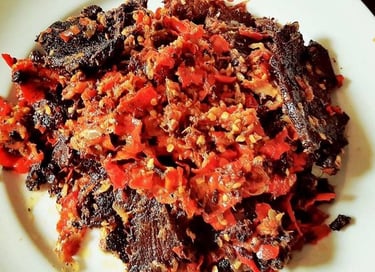
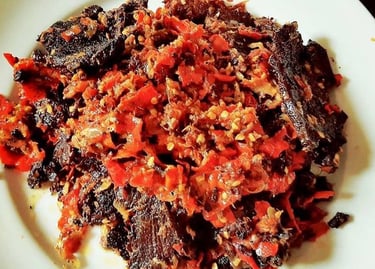
Dendeng Balado: Thinly sliced crispy beef served with a chili paste (red or green) known as sambal balado.
🗺️Famous Tourist Attractions
West Sumatra offers spectacular natural landscapes and deep cultural immersion.
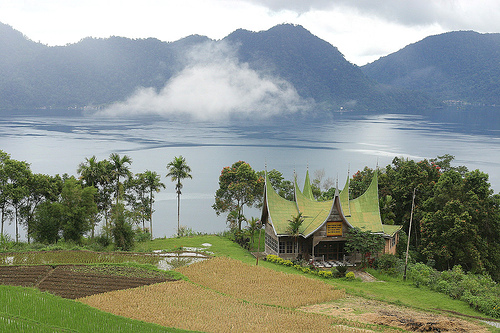
Lake Maninjau (Danau Maninjau): A stunning caldera lake famous for the winding Kelok 44 road that descends to its shores, offering breathtaking views of the crater.
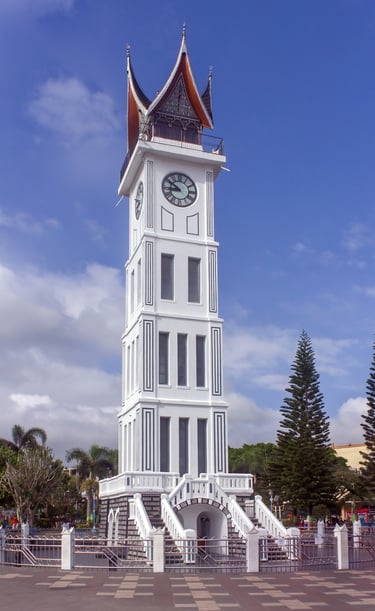
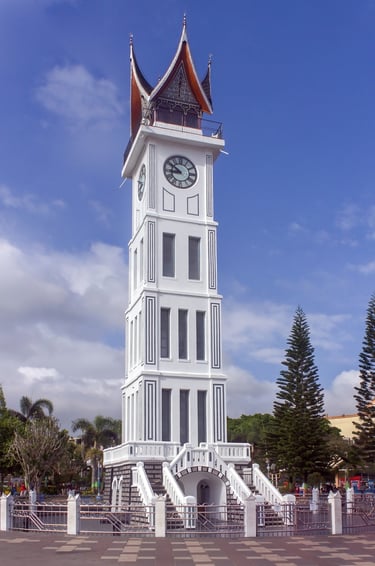
Jam Gadang (Bukittinggi): The iconic clock tower in Bukittinggi, a historical landmark built during the Dutch colonial era, featuring a unique roof that reflects Minangkabau architecture.
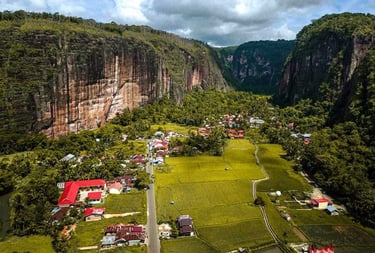
Harau Valley (Lembah Harau): A beautiful canyon and nature reserve near Payakumbuh, featuring towering granite cliffs, lush rice fields, and numerous waterfalls.
Pagaruyung Palace (Istano Basa Pagaruyung): A magnificent reconstruction of the former Minangkabau royal palace, serving as a museum and cultural landmark that showcases the grandeur of the Rumah Gadang architecture.
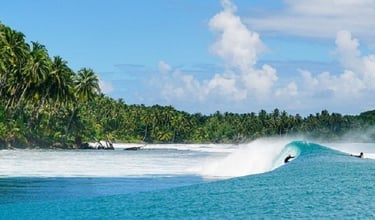
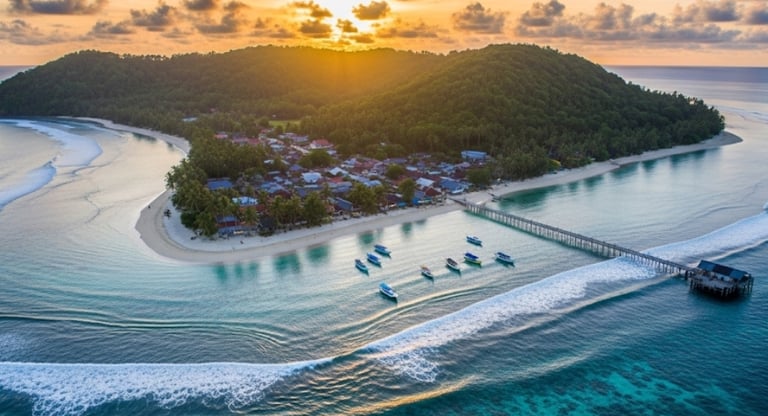
Mentawai Islands: A world-renowned destination for surfing, offering huge, consistent waves and the chance to observe the unique culture of the Mentawai people.

✈️Transportation Infrastructure
West Sumatra’s transportation network connects its coastal plains and highlands, facilitating trade and tourism.
Airport (Bandar Udara):
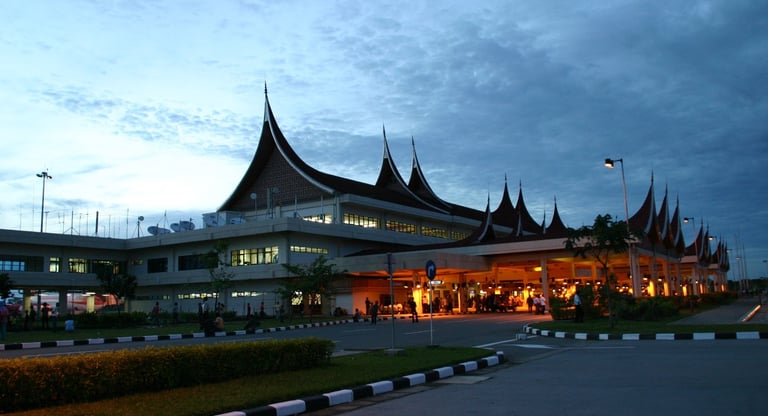
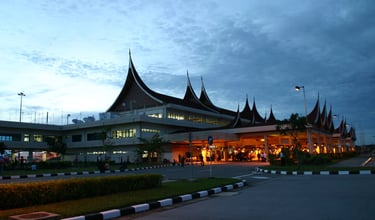
Minangkabau International Airport (PDG): Located near Padang, this is the main airport, serving extensive domestic routes across Indonesia and international flights, primarily to Malaysia and Saudi Arabia (for Umrah/Hajj).
Port (Pelabuhan):
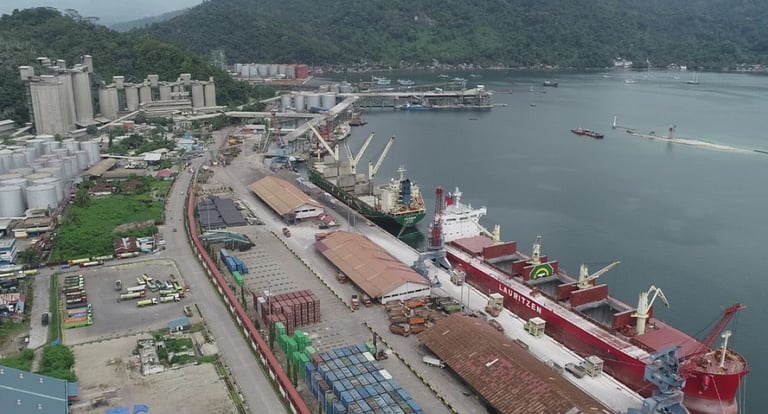
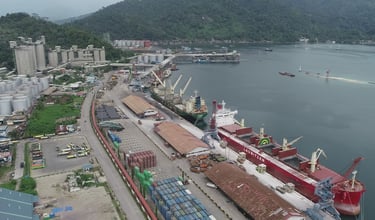
Teluk Bayur Port: Located in Padang, this is one of the most historically important and currently busiest cargo ports on Sumatra's western coast, handling commodity exports (such as cement and coal) and container traffic.
Mentawai Island Ferry Terminals: Several smaller ports facilitate ferry and fast boat services to the Mentawai Islands, a world-renowned surfing destination.
Railroad (Stasiun Kereta Api):
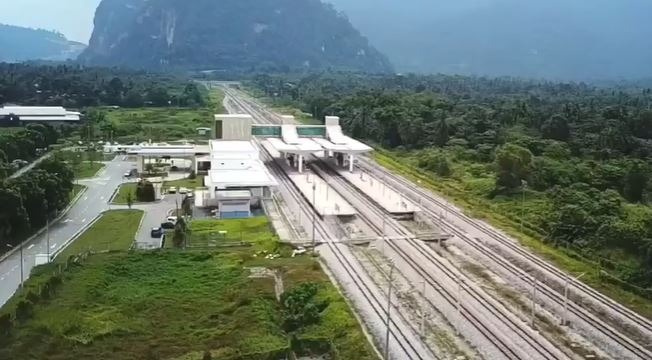
West Sumatra has a functioning, though limited, railway network, primarily used for goods transport (especially coal).
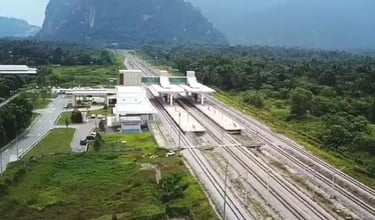
Padang Station serves as a passenger hub, notably for the Minangkabau Express, a train connecting Padang to the Minangkabau International Airport (PDG). There are also occasional scenic passenger services connecting Padang to Pariaman and Solok.
West Sumatra is a rich province that enthralls visitors with its dramatic mountain scenery, its world-famous cuisine, and its deeply rooted, powerful matrilineal traditions.
Follow us to explore Indonesia with expert travel guidance
©PT.Sinar Pesona Travelindo 2025. All rights reserved.